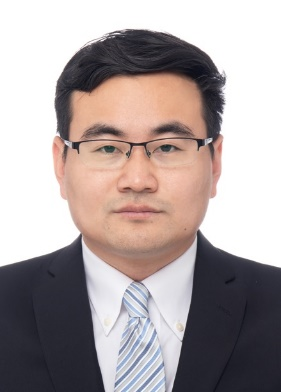
🎓️️Prof. Bing ShiWuhan University of Technology, China (Vice Dean) Prof. Bing Shi is a Professor and Doctoral Supervisor serving as the Associate Dean of the School of Computer Science and Artificial Intelligence. He earned his Bachelor's and Master's degrees in Computer Science and Technology from Nanjing University, China, and completed his Ph.D. at the University of Southampton, UK. His primary research focuses on Artificial Intelligence and Service Computing, with an emphasis on developing AI-driven solutions for decision-making in complex distributed environments. Prof. Shi has led four national-level and four ministerial-level (MoE-funded) research projects, publishing over 40 papers in top-tier journals and conferences recommended by the China Computer Federation (CCF), including EAAI, ESWA, IOTJ, TNSM, KBS, ICWS, and ICSOC. An active member of IEEE, ACM, and CCF, he serves on the CCF Technical Committee on Service Computing. |
🎓️️Prof. Leyuan LiuCentral China Normal University, China Liu Leyuan is a professor and doctoral supervisor at Central China Normal University. His main research areas include computer vision and computer graphics, artificial intelligence-assisted special education, educational metaverse, and educational robotics. He has led more than ten research projects, including those funded by the National Natural Science Foundation of China, sub-projects of the National Key Research and Development Program. He has published over 80 papers in internationally renowned journals such as IEEE Transactions on Multimedia and top-tier artificial intelligence conferences including CVPR, ECCV, and ACM MM. He holds more than 20 authorized invention patents. He has received multiple academic honors, including the First Prize of Hubei Province Science and Technology Progress Award (2020), the Second Prize of Hubei Province Social Science Outstanding Achievement Award (2018, 2020), and the First Prize of Hubei Province Natural Science Excellent Paper Award (2012). |
🎓️️Prof. Baoquan LiTiangong University, China Baoquan Li received the B.Eng. degree in automation and the Ph.D. degree in control theory and control engineering from Nankai University, Tianjin, China, in 2010 and 2015, respectively. Since 2013 to 2014, he was a joint Ph.D. student with Nanyang Technological University, Singapore, awarded by China Scholarship Council. He is currently a Professor with the Tianjin Key Laboratory of Autonomous Intelligence Technology and Systems, and the School of Control Science and Engineering, Tiangong University. He is a senior member of IEEE. His current research interests include computer vision, sensor fusion, unmanned aerial vehicle, and nonlinear control. He has published over 50 technical papers in journals and conference proceedings, and he is a principal investigator of over 10 granted scientific projects, including National Natural Science Foundation of China. |
🎓️️Assoc. Res. Jianhui ZhangZhengzhou University, China Jianhui Zhang, Ph.D., associate research fellow, master's supervisor at Zhengzhou University, is a member of the Special Committee on Intrinsic Security under the China Communications Society, the Special Committee on Network and System Security of the China Computer Federation (CCF), and the Special Committee on Intrinsic Security and Network Resilience of the Cyberspace Security Society of China. He has long been engaged in research on intrinsic security in cyberspace, novel network architectures, and trustworthy artificial intelligence applications. In recent years, he has undertaken a project under the National Key Research and Development Program titled "Multimodal Network Innovation Environment" and a major scientific and technological project in Henan Province. |
🎓️️Assoc. Prof. Yuanyuan HuangChengdu University of Information Technology, China Yuanyuan Huang received her Ph.D. jointly from the University of Washington and the University of Electronic Science and Technology of China (UESTC), and completed her postdoctoral research in Information and Communication Engineering at UESTC. She is currently the Deputy Director of the Sichuan Key Laboratory of Advanced Cryptographic Technologies and System Security, Secretary-General of the Digital Network Security Professional Committee of the Sichuan Urban-Rural Development Research Association. She has led or participated in over ten national and provincial-level projects. She serves as an editorial board member of Scientific Reports (a journal under Nature, ranked in the Chinese Academy of Sciences Zone 2), Lead Guest Editor of USCN (a CCF-recommended journal), invited associate editor of Frontier in Physics. |